MP3 patents expired in 2017 - what changed for your audio files
Fraunhofer and Technicolor ended their MP3 licensing program on 23 April 2017 after the last core patents expired. MP3 did not vanish - every phone and browser still plays it - but encoders no longer owe a royalty for the basic format. Your workflow change: you can convert and share MP3 freely; pick AAC or FLAC when quality or streaming compatibility matters more.
Last reviewed: 2026-07-20
freetoolonline.com Editorial TeamWhat happened
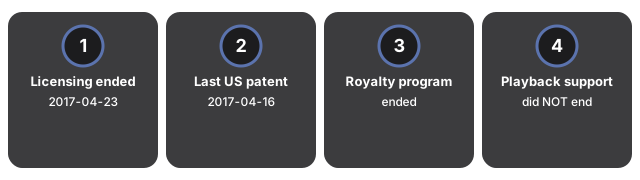
On 23 April 2017, Technicolor's MP3 licensing program for certain MP3-related patents and software of Technicolor and Fraunhofer IIS was terminated, according to Fraunhofer's official MP3 page and its audio blog. The program ended because the last patent included in that bundle had expired - not because MP3 stopped working. Independent reporting from Billboard and Marco.org notes the final relevant U.S. patent (6,009,399, held by Technicolor) expired on 16 April 2017, a week before the licensing shutdown was announced.
| Detail | Value |
|---|---|
| Licensing program ended | 2017-04-23 (Fraunhofer / Technicolor announcement) |
| Last core U.S. patent expired | 2017-04-16 (U.S. Patent 6,009,399) |
| What ended | Patent royalty program for MP3 encoders/decoders in the bundle |
| What did NOT end | MP3 playback support in phones, browsers, and players |
| Fraunhofer's follow-on focus | AAC and MPEG-H for streaming and broadcast |
Fraunhofer's blog post stresses that some implementation-specific patents outside the core bundle may still have been active in 2017, so "license-free everywhere for every feature" was not automatic on day one. For everyday file conversion and playback, the practical effect was the same: Linux distros and open-source tools could ship MP3 support without paying Fraunhofer.
Why it matters for everyday files
Before 2017, shipping an MP3 encoder in software often meant a patent license fee. That is why some operating systems shipped MP3 decode but not encode, and why "convert to MP3" tools sometimes carried licensing notes. After the core patents expired, MP3 became the safe lowest-common-denominator format again: a podcast clip, a ringtone extracted from a video, or a voice memo exported for email will open on virtually any device. The trade-off is unchanged: MP3 is lossy and tops out around 320 kbps, so archiving master recordings in FLAC or delivering to Apple-centric workflows may still favor AAC.
What to do with your files right now
When you are choosing or converting audio formats today:
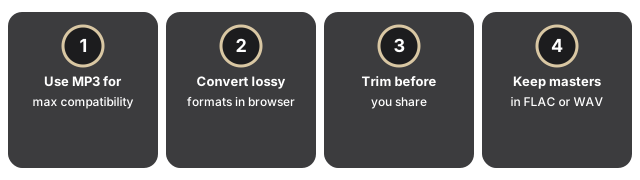
- Use MP3 when you need maximum compatibility. Ringtones, short clips, and attachments that must open on old car stereos and office PCs still travel well as MP3. Extract audio from a video with the video converter, then export MP3 if the destination is unknown.
- Convert between lossy formats in the browser. The audio converter handles MP3 alongside WAV, AAC, and other common containers without installing a desktop encoder.
- Trim before you share. Cut silence or a long intro with the audio trimmer guide, then save the shorter MP3 to keep attachment sizes down.
- Keep masters elsewhere. MP3 remains a delivery format, not an archive format. Store originals in FLAC or WAV when you might re-edit later.