Json Formatter Online Vs Alternatives
Quick reference for readers who land here from a search for "json formatter online vs alternatives". This guide pairs with the tool at JSON Parser & Formatter.
Why this matters
Why this matters for JSON Parser and Formatter: plenty of paths lead to formatted JSON - a desktop editor like VS Code, the jq command line, JSON.parse in the browser console, or the in-browser tool. This guide weighs each route against your paste size, privacy need, and how often you format.
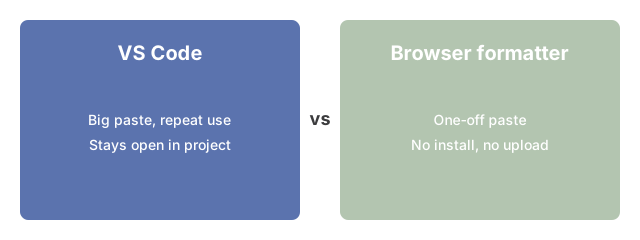
When jq fits the shell pipeline
The jq command line is the right route when the format step is one stage in a longer shell pipeline. You read a JSON file from disk, hand it to jq for indentation or a filter expression, and pipe the cleaned output to the next command - a grep, a curl, or a redirect into a downstream tool. Browser-based and editor-based alternatives do not slot into that flow: a browser tab cannot receive piped stdin and a desktop editor expects an interactive paste. Pick jq when the format is one verb in a chained sequence and the surrounding stages are also command-line.

How the tool fits
How the tool fits: with the trade-offs above in hand, open JSON Parser and Formatter and try the in-browser route. It keeps the payload off a server, renders an expandable tree, and stays responsive on the paste sizes a desktop editor or the jq CLI also handle well.
To decide which specific situation calls for the formatter rather than the alternatives, JSON formatter - when to use it works through the decision. For the broader choice of JSON vs YAML vs TOML in configuration files, JSON vs YAML vs TOML - config formats explained covers the structural differences between the three formats.
Why trust these tools
- Ten-plus years of web tooling. The freetoolonline editorial team has shipped browser-based utilities since 2015. The goal has never changed: get you to a working output fast, without an install.
- No install, no sign-up. Open a tool and get a working output in seconds - nothing to download and no account to create. Tools that need heavy processing run it on our service, so even a low-powered machine gets the job done.
- Analytics stops at the page view. We measure which pages get visited, not what you type or upload inside a tool. There is nothing to sign in to and no profile is attached to your input.
- Open-source core components. The processing engines underneath (libheif, libde265, pdf-lib, terser, clean-css, ffmpeg.wasm, and others) are public and audit-able. We link to each one in its tool page's footer.
- Free, with or without ads. All tools are fully functional without sign-up. The Disable Ads button in the header is always available if you need a distraction-free run.