
Brachiosaurus in 3D - click the head, neck, body, leg, or tail for a fact (full controls on the Dinosaurs 3D hub).
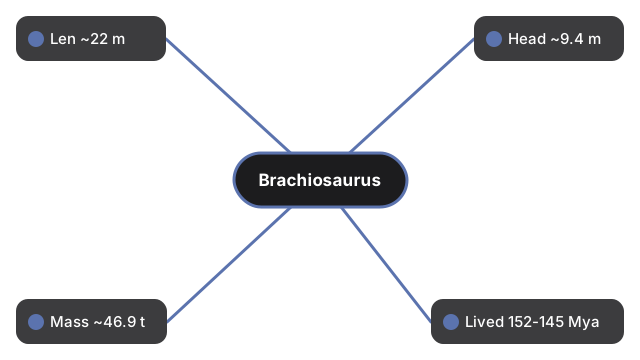
Brachiosaurus rose about 9.4 m at the head in common size reconstructions and stretched about 22 m from snout to tip - turn on the human figure to see how a person compares to this high-browsing sauropod.
The measurements in the panel follow the Natural History Museum.
Brachiosaurus 3D Viewer
The Brachiosaurus model below rotates as you drag - zoom in and click any body part for a quick fact, or see the Dinosaurs 3D hub for the full control list.
Brachiosaurus lived in the Late Jurassic, about 152 to 145 million years ago, in what is now the western United States. The Natural History Museum cites a length of about 22 m and a mass of about 46.9 tonnes. Longer front legs than hind legs lifted the chest and neck, so the animal browsed high vegetation much as a giraffe does today.
The genus was named by Elmer S. Riggs in 1903 from finds in Colorado (type species Brachiosaurus altithorax). Some older museum displays once used African material now usually placed in the related genus Giraffatitan; the figures on this page follow the NHM listing for Brachiosaurus.
| Measure | Figure |
|---|---|
| Length | about 22 m (Natural History Museum) |
| Head height (common reconstructions) | about 9.4 m |
| Weight | about 46.9 tonnes (NHM) |
| When it lived | 152-145 million years ago (Late Jurassic) |
| Diet | Herbivore |
Colors here are an artistic reconstruction - fossils don't preserve them; the numbers above are real published values.
Frequently Asked Questions
How big was Brachiosaurus?
About 22 m long and about 46.9 tonnes according to the Natural History Museum. Head height in common reconstructions is about 9.4 m. Turn on the human figure in the viewer to see the scale against a 1.8 m person.
Why were the front legs longer?
Longer front legs raised the chest and neck, letting the animal reach high foliage. That upright silhouette is the trait the name Brachiosaurus ("arm lizard") points to.
When and where did Brachiosaurus live?
In the Late Jurassic, about 152 to 145 million years ago, mainly in what is now the western United States. Elmer S. Riggs named the genus in 1903 from Colorado finds (Brachiosaurus altithorax).
Is the model scientifically accurate?
The proportions follow published figures, but the skin color and soft-tissue outline are an artistic reconstruction - fossils preserve bone, not soft tissue or color. This model is not a fossil-accurate skeleton. The length, weight, and age figures shown are real published values from the Natural History Museum.
Do I need to install anything to view it?
No. The model renders in your browser with WebGL - no app, no account, and nothing about your visit is sent to a server. The 3D engine loads once and is then cached.