
Seismosaurus in 3D - click a tail vertebra, the long neck, or a leg for a fact (full controls on the Dinosaurs 3D hub).
Seismosaurus - the "earth-shaking lizard" - is the popular name for a Late Jurassic Morrison diplodocid now widely treated as Diplodocus hallorum; turn on the human figure to see how a person compares to its body.
The measurements in the panel follow published estimates, with ranges shown where sources disagree.
Seismosaurus 3D Viewer
Below, a Seismosaurus you can drag to turn, zoom closer, and click the neck, a leg, or the tail for a fact about that part (the Dinosaurs 3D hub lists every control).
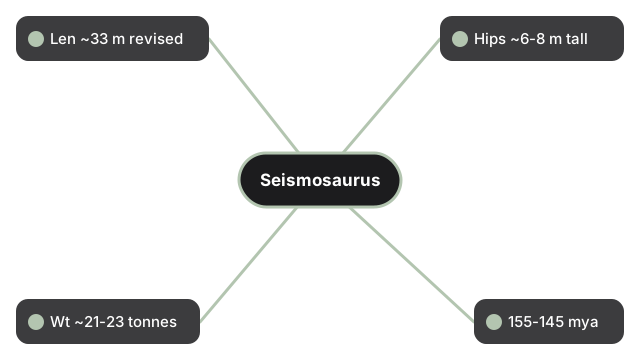
Seismosaurus lived in the Late Jurassic, about 155 to 145 million years ago, in the Morrison Formation of western North America. Gillette named it in 1991. Most specialists now treat it as a junior synonym of Diplodocus (often as Diplodocus hallorum). Early length claims of about 39-52 m were cut to about 33 m after a caudal-vertebra reappraisal; mass estimates are about 21-23 tonnes, not the old 100-tonne popular figures.
| Measure | Figure |
|---|---|
| Length | about 33 m (revised; older 39-52 m estimates rejected) |
| Standing height | about 6-8 m at the hips for a large adult (proportionate estimate) |
| Weight | about 21-23 tonnes |
| When it lived | about 155-145 million years ago (Late Jurassic) |
| Diet | Herbivore |
Everything happens on your device via WebGL - no sign-up, no upload, nothing sent anywhere else. For the broader genus already on this site, open the Diplodocus 3D Viewer. Figures above are published values with ranges where sources disagree.
Frequently Asked Questions
How big was Seismosaurus?
Revised axial length is about 33 m. Early popular estimates of about 39-52 m (and even higher) were based on misplaced middle caudal vertebrae and are no longer accepted. Mass is about 21-23 tonnes - far below old 100-tonne claims. Turn on the human figure for scale.
Is Seismosaurus the same as Diplodocus?
Most specialists treat Seismosaurus as a junior synonym of Diplodocus, often as Diplodocus hallorum. This viewer keeps the popular search name while stating that synonymy. Compare with the Diplodocus 3D Viewer.
When and where did it live?
Late Jurassic Morrison Formation of western North America, about 155-145 million years ago. The type material is from New Mexico.
What does the name mean?
Seismosaurus means "earth-shaking lizard," from the image of a huge sauropod vibrating the ground as it walked. Gillette coined the name in 1991.
Is the model scientifically accurate?
Proportions follow revised published figures, but skin color and soft tissue are artistic. This is not a fossil-accurate skeleton. Length and mass use the revised values with ranges, not the discarded mega-estimates.
Do I need to install anything to view it?
No. The model renders in your browser with WebGL - no app, no account, and nothing about your visit is sent to a server. When available, a free-licensed glTF model may swap in after first paint.