
Drag to rotate the Chasmosaurus, scroll or pinch to zoom, and click a body part - the frill, a brow horn, or a shoulder - to read what fossils tell us about it. The panel beside the model carries the real figures.
Chasmosaurus was a Late Cretaceous ceratopsid from Alberta, Canada, known for a long frill with window-like openings; turn on the human figure to see how a person compares to its body.
The colors and skin here are an artistic reconstruction; fossils preserve bone, not soft tissue or color. This model is not a fossil-accurate skeleton. The measurements in the panel follow published estimates, with ranges shown where sources disagree.
Chasmosaurus 3D Viewer
This page renders a Chasmosaurus as a 3D model you can spin in the browser - drag to rotate, scroll or pinch to zoom, toggle a 1.8 m person beside it for scale, and click the frill, a brow horn, or a shoulder to read a fact about that part.
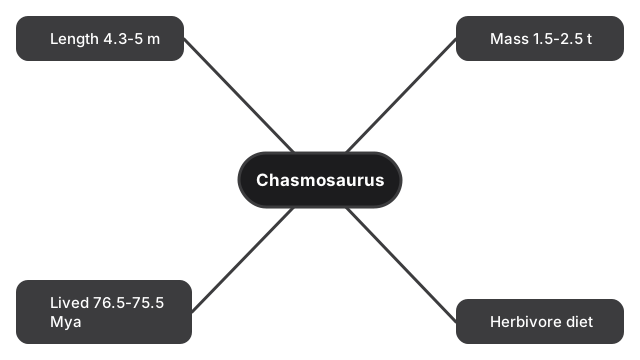
Chasmosaurus was a Late Cretaceous ceratopsian from the Dinosaur Park Formation of Alberta, Canada. Lawrence Lambe named the genus in 1914. Published length estimates commonly fall around 4.3 to 5 m; mass estimates span about 1.5 to 2.5 tonnes - this viewer uses about 4.8 m and 2 t as mid-range panel values within those ranges. Its skull is famous for a large, fenestrated frill with openings, and brow horns that are typically smaller than those of Triceratops.
| Measure | Figure |
|---|---|
| Length | about 4.3-5 m (panel ~4.8 m) |
| Weight | about 1.5-2.5 t (panel ~2 t) |
| When it lived | about 76.5-75.5 Mya (Late Cretaceous) |
| Diet | Herbivore |
Everything runs on your device with WebGL, so the model works without an account and without sending anything to a server. The skin tone and pattern are an artistic reconstruction, because fossils do not preserve color or soft tissue; this model is not a fossil-accurate skeleton. For a sibling ceratopsian in the same collection, see the Triceratops 3D Viewer or the Pentaceratops 3D Viewer.
Frequently Asked Questions
How big was Chasmosaurus?
Published length estimates commonly fall around 4.3 to 5 m. Mass estimates span about 1.5 to 2.5 tonnes depending on the reconstruction; this viewer uses 4.8 m and 2 t as mid-range panel values within those ranges. Turn on the human figure to compare scale against a 1.8 m person.
What are the openings in the frill?
Chasmosaurus is known for a large, fenestrated frill - bony openings (fenestrae) in the shield behind the skull. In life those windows would have been covered by skin and possibly used for display, species recognition, or thermoregulation; the exact soft-tissue look is not preserved in fossils.
How is Chasmosaurus different from Triceratops?
Both are ceratopsians, but Chasmosaurus is an earlier chasmosaurine with a longer, more fenestrated frill and relatively smaller brow horns. Triceratops lived later, had a shorter solid frill, and much longer brow horns. This site has separate viewers for each species.
When and where was it found?
In the Late Cretaceous, about 76.5 to 75.5 million years ago, in the Dinosaur Park Formation of Alberta, Canada. Lawrence Lambe named the genus in 1914 from material collected in that region.
Is the model scientifically accurate?
The proportions follow published length and mass ranges, but frill shape, horn size, skin color, and soft-tissue outline are an artistic reconstruction - fossils preserve bone, not color or muscle shape. This model is not a fossil-accurate skeleton.
Do I need to install anything to view it?
No. The model renders in your browser with WebGL - no app, no account, and nothing about your visit is sent to a server. When available, a free-licensed glTF model may swap in after first paint.