
Drag to rotate the Pentaceratops, scroll or pinch to zoom, and click a body part - the frill, a brow horn, or a shoulder - to read what fossils tell us about it. The panel beside the model carries the real figures.
Pentaceratops was a Late Cretaceous ceratopsid from New Mexico best known for its huge frill and five horn-like projections on the face; turn on the human figure to see how a person compares to its body.
The colors and skin here are an artistic reconstruction; fossils preserve bone, not soft tissue or color. This model is not a fossil-accurate skeleton. The measurements in the panel follow published estimates, with ranges shown where sources disagree.
Pentaceratops 3D Viewer
This page renders a Pentaceratops as a 3D model you can spin in the browser - drag to rotate, scroll or pinch to zoom, toggle a 1.8 m person beside it for scale, and click the frill, a brow horn, or a shoulder to read a fact about that part.
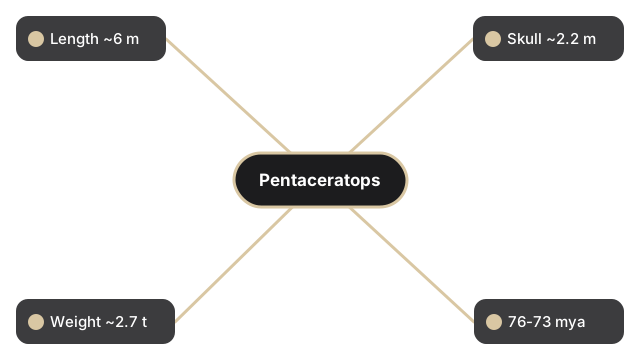
Pentaceratops lived in the Late Cretaceous, about 76 to 73 million years ago, in the San Juan Basin of New Mexico. Length estimates run about 5.5 to 7 m (commonly cited near 6 m); mass estimates run about 2.5 to 3 tonnes. Its name means "five-horned face" for two brow horns, one nose horn, and two smaller cheek projections beneath a huge frill - different from Triceratops (three horns, no cheek projections) and Albertaceratops (long brow horns, earlier and from Alberta, no cheek projections).
| Measure | Figure |
|---|---|
| Length | about 5.5-7 m (commonly cited near 6 m) |
| Skull length | about 2.16-2.3 m in known specimens - among the largest skulls of any land animal |
| Weight | about 2.5-3 tonnes commonly cited |
| When it lived | about 76-73 million years ago (Late Cretaceous) |
| Diet | Herbivore |
Everything runs on your device with WebGL - no account, nothing sent to a server. Soft-tissue color is an artistic reconstruction; this model is not a fossil-accurate skeleton. Figures above are published values with ranges where sources disagree.
Frequently Asked Questions
Why is Pentaceratops called "five-horned face"?
The name refers to two brow horns, one nose horn, and two smaller pointed cheek projections beneath the frill - five horn-like structures on the skull in total.
How big was Pentaceratops?
Published estimates usually fall around 5.5 to 7 m long (commonly cited near 6 m) and about 2.5 to 3 tonnes. Its skull alone ran about 2.16 to 2.3 m in known specimens. Turn on the human figure to see the scale against a 1.8 m person.
When and where did it live?
In the Late Cretaceous, about 76 to 73 million years ago, in the San Juan Basin of New Mexico (Kirtland and Fruitland Formations). The holotype skull was collected there in the early 1920s.
How is it different from Triceratops or Albertaceratops?
Triceratops has three facial horns and a shorter frill. Albertaceratops is an earlier centrosaurine from Alberta with long brow horns but no cheek projections. Pentaceratops is a chasmosaurine with an especially large frill and the extra pair of cheek projections that give it its name. This site has separate viewers for comparison.
Is the model scientifically accurate?
The proportions follow published figures, but soft-tissue color is an artistic reconstruction. This model is not a fossil-accurate skeleton. Length, weight, and age figures are real published values, with ranges cited because sources vary.
Do I need to install anything to view it?
No. The model renders in your browser with WebGL - no app, no account, and nothing about your visit is sent to a server. When available, a free-licensed glTF model may swap in after first paint.