Elasmotherium in 3D - click the head, a leg, or the tail for a fact (full controls on the Dinosaurs 3D hub).
Elasmotherium was a giant, heavily built rhinoceros with a single very large nasal boss rather than a pair of horns - turn on the human figure to see how the whole animal, close to the length of a small car, compares to a person.
Hide color is an artistic guess - bone is what actually survives as fossil. Body shape tracks the real skeleton, and panel figures use the published estimates.
Elasmotherium 3D Viewer
Drag to spin the Elasmotherium model below, zoom in close, and click the head or a leg to read a fact about that part (full controls on the Dinosaurs 3D hub).
Elasmotherium was not a dinosaur - it was a giant rhinoceros that lived long after the dinosaurs went extinct, from roughly 2.6 million years ago until about 39,000 years ago, spanning the Late Pliocene through the Late Pleistocene ice age. It is sometimes called the "Siberian unicorn" because of a single very large boss on its nasal bones, which many reconstructions show topped with one big horn - though no horn material has ever been found fossilized, so the exact size and shape of any horn is inferred rather than directly observed. Published length estimates put it at about 4.5 m, with a shoulder height over 2 m, and mass estimates ranging from about 3.5 to 5 metric tons depending on the study.
The genus was first proposed in 1808 and formally named the following year by naturalist Gotthelf Fischer von Waldheim, based on a lower jaw and teeth found in Russia and given to Moscow University in 1807. A 2018 study led by Pavel Kosintsev used direct radiocarbon dating on two dozen fossils and found the species survived until about 39,000 years ago - thousands of years later than long assumed - meaning the last of these giant rhinos were alive at the same time as early modern humans in Europe and Asia.
| Measure | Figure |
|---|---|
| Length | about 4.5 m |
| Shoulder height | over 2 m |
| Weight | about 3.5-5 metric tons (range across studies) |
| When it lived | about 2.6 million to roughly 39,000 years ago (Late Pliocene-Late Pleistocene) |
| Diet | Herbivore (grazer) |
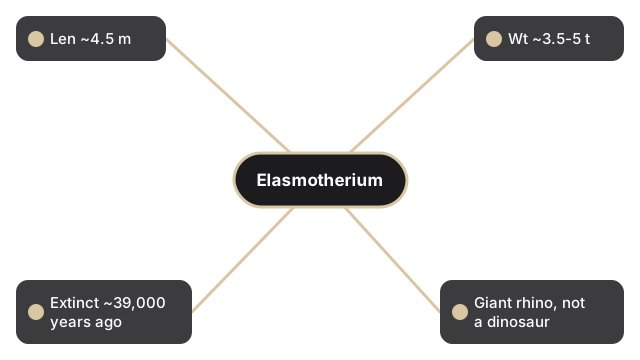
Colors here are an artistic reconstruction - fossils don't preserve them; the numbers above are real published values, with a range given where sources disagree.
See also Megatherium (ground sloth) and Moropus, other Ice Age mammals on this site, not dinosaurs.
Frequently Asked Questions
Was Elasmotherium a dinosaur?
No. Elasmotherium was a giant rhinoceros, a mammal, that lived tens of millions of years after the dinosaurs went extinct. This viewer includes it because it is one of the most-searched prehistoric animals.
Why is it called the "Siberian unicorn"?
Its skull had a single very large boss on the nasal bones, larger than on any other known rhinoceros. Many reconstructions show it topped with one big horn, but no horn material has ever been found fossilized, so the exact size and shape of any horn is inferred, not directly observed.
How big was Elasmotherium, and when did it live?
Published length estimates put it at about 4.5 m with a shoulder height over 2 m, and mass estimates range from about 3.5 to 5 metric tons depending on the study. It lived from roughly 2.6 million years ago until about 39,000 years ago, based on direct radiocarbon dating published in 2018 - far more recent than once thought.
Is the model scientifically accurate?
The body proportions follow the fossil skeleton, but the skin color and texture are an artistic reconstruction. Fossils preserve bone, not color or soft tissue. The figures shown in the panel are real published values.