
Moropus in 3D - click the head, a foreleg, or the tail for a fact (full controls on the Dinosaurs 3D hub).
Moropus was a clawed chalicothere mammal, not a dinosaur - turn on the human figure to see how a large individual's 2.4 m shoulder height compares, with front claws built for hooking branches rather than running.
The colors and fur pattern shown for this Moropus are an artistic reconstruction; fossils preserve bone, not soft tissue or color. The body proportions follow the fossil skeleton, but the measurements in the panel are the ones actually published.
Moropus 3D Viewer
Click and drag the Moropus model to spin it, zoom for a closer look, and click a body part to read a fact (the Dinosaurs 3D hub covers all controls).
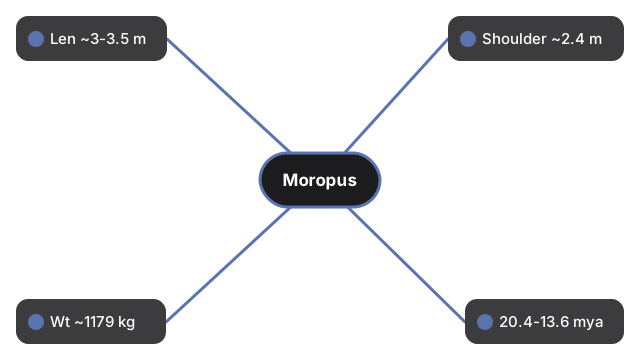
Moropus, a clawed chalicothere mammal rather than a dinosaur, roamed North America during the Miocene, about 20.4-13.6 million years ago. Marsh named the genus in 1877; the larger species M. elatus stood roughly 2.4 m at the shoulder, measured about 3-3.5 m long, with one specimen estimated near 1179 kg.
| Measure | Figure |
|---|---|
| Length | about 3-3.5 m (panel baseline 3.3 m) |
| Shoulder height | about 2.4 m for large M. elatus |
| Weight | about 1179 kg for one estimated specimen |
| When it lived | about 20.4-13.6 million years ago (Miocene) |
| Diet | Herbivore (browser with large forelimb claws) |
The viewer is 100% local via WebGL - no sign-in, no upload, and no data about your visit leaves the browser. Compare with the Ground Sloth 3D Viewer (also a mammal, not a dinosaur).
See also Brontotherium, another Cenozoic mammal (not a dinosaur) on this site.
Frequently Asked Questions
How big was Moropus?
Large species such as M. elatus stood about 2.4 m at the shoulder. Length is about 3-3.5 m. One specimen is estimated near 1179 kg. Turn on the human figure for scale.
Is Moropus a dinosaur?
No. It was a Miocene chalicothere - an odd-toed ungulate mammal with large forelimb claws used for browsing. This section also covers other non-dinosaurs when readers search for them here.
When and where did it live?
Miocene North America, about 20.4-13.6 million years ago. Marsh named the genus in 1877.
What does the name mean?
Moropus means slow foot, from Greek. It refers to early ideas about its gait; the large claws are the distinctive feature readers notice first.
Is the model scientifically accurate?
Size follows published figures with ranges, but skin color and soft tissue are artistic. This is not a fossil-accurate skeleton.
Do I need to install anything to view it?
No. The model renders in your browser with WebGL - no app, no account, and nothing about your visit is sent to a server. When available, a free-licensed glTF model may swap in after first paint.