
Pachycephalosaurus in 3D - click the domed skull, the tail, or a leg for a fact (full controls on the Dinosaurs 3D hub).
Pachycephalosaurus was a plant-eating dinosaur known for the extremely thick, rounded dome on top of its skull - turn on the human figure to see how a person compares to its body.
The measurements in the panel follow published estimates, with ranges shown where sources disagree.
Pachycephalosaurus 3D Viewer
Spin this Pachycephalosaurus model by dragging, zoom for detail, and click the domed skull, the tail, or a leg to surface a fact about it (see the Dinosaurs 3D hub for the full control list).
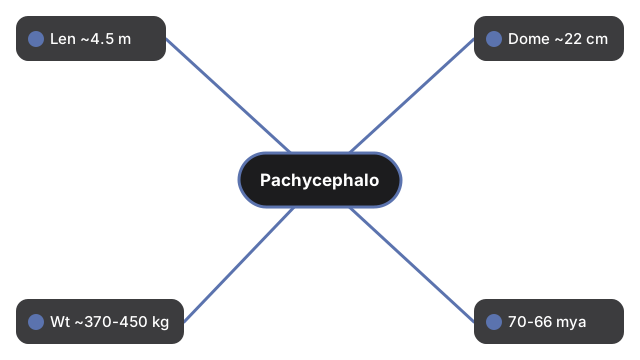
Pachycephalosaurus lived in the Late Cretaceous, about 70 to 66 million years ago, in what is now the western United States and Canada. Published length estimates run about 4.5 m, with Britannica citing up to roughly 5 m, and weight estimated at about 370 to 450 kg. It is the largest known dome-headed dinosaur, named for the extremely thick, high-domed skull roof that could reach about 22 cm thick - roughly 20 times thicker than most other dinosaurs' skull roofs.
Type species Pachycephalosaurus wyomingensis was named in 1931 by American paleontologist Charles W. Gilmore, who first classified it as a species of Troodon; the genus Pachycephalosaurus was erected in 1943 by Barnum Brown and Erich Maren Schlaikjer. Its diet is uncertain - small, ridged teeth suggest a mostly plant-based diet, though some specimens show blade-like front teeth that have led a few researchers to debate limited omnivory. What the dome was for is also still debated: the popular idea of head-on ramming between rival males, like bighorn sheep, has been challenged by studies questioning whether the neck and spine could safely absorb such impacts; gentler flank-butting or simple species and sex recognition have also been proposed.
| Measure | Figure |
|---|---|
| Length | about 4.5 m (Britannica cites up to roughly 5 m) |
| Skull dome thickness | up to about 22 cm |
| Weight | about 370-450 kg |
| When it lived | 70-66 million years ago (Late Cretaceous, Maastrichtian) |
| Diet | Uncertain - likely mostly plants; limited omnivory debated |
Colors here are an artistic reconstruction - fossils don't preserve them; the numbers above are real published values, and ranges are shown because sources vary.
Frequently Asked Questions
How big was Pachycephalosaurus?
Published length estimates run about 4.5 m, with Britannica citing up to roughly 5 m, and weight estimated at about 370 to 450 kg. Turn on the human figure in the viewer to see the scale against a 1.8 m person.
What was the dome on its head for?
Nobody knows for certain. The popular idea is that males rammed the dome head-on like bighorn sheep, but studies have questioned whether the neck and spine could safely absorb that kind of impact. Gentler flank-butting and simple display for species or sex recognition have also been proposed. This model presents it as a debated question, not a settled fact.
Was Pachycephalosaurus a meat-eater?
Its diet is uncertain. Small, ridged teeth suggest a mostly plant-based diet, but some specimens show blade-like front teeth that have led a few researchers to debate limited omnivory. Neither a strict herbivore nor a strict carnivore diagnosis is settled.
When and where did Pachycephalosaurus live?
In the Late Cretaceous, about 70 to 66 million years ago, in what is now Montana, South Dakota, Wyoming, and Alberta - the same rock layers that produced Tyrannosaurus, Triceratops, and Ankylosaurus.
Is the model scientifically accurate?
The dome and body proportions follow published figures, but the skin color and soft-tissue outline are an artistic reconstruction - fossils preserve bone, not soft tissue or color. This model is not a fossil-accurate skeleton. The length, weight, and age figures shown are real published values, with ranges cited because sources vary.
Do I need to install anything to view it?
No. The model renders in your browser with WebGL - no app, no account, and nothing about your visit is sent to a server. The 3D engine loads once and is then cached. When available, a free-licensed glTF model may swap in after first paint.