
Parasaurolophus in 3D - click the head, its long tube crest, the tail, or a leg for a fact (full controls on the Dinosaurs 3D hub).
Parasaurolophus was a large duck-billed herbivore best known for the long, hollow crest sweeping back from its head - turn on the human figure to see how a person compares to its body and crest.
The measurements in the panel follow published estimates, with ranges shown where sources disagree.
Parasaurolophus 3D Viewer
Turn the Parasaurolophus with a drag, zoom closer with scroll, and click a body part to get a fact about it - the Dinosaurs 3D hub lists every control.
Parasaurolophus lived in the Late Cretaceous, about 76.5 to 73 million years ago, in what is now western North America. Published length estimates vary by source and species - Wikipedia's synthesis of the literature cites roughly 7.5 to over 9 m, while other sources give an overall range up to about 11 m; weight estimates range even more widely, from about 2.6 to more than 5 tonnes. Three species are recognized: P. walkeri, the long-crested P. tubicen, and the short, rounded-crested P. cyrtocristatus. The genus name means "near Saurolophus," a reference to a related hadrosaur.
Its most recognizable feature is the long, hollow crest that curves up and back from the skull, formed by an extension of the nasal passages. Its function is debated - proposed explanations include sound resonance, visual species and sex recognition, and heat regulation - and no single explanation is proven. Canadian paleontologist William Parks named the genus in 1922 from a specimen found in 1920 near the Red Deer River in Alberta, Canada; the type specimen is catalogued as ROM 768.
| Measure | Figure |
|---|---|
| Length | about 7.5 to over 9 m (sources vary; some cite up to about 11 m) |
| Standing height | about 4.4-5.6 m |
| Weight | about 2.6 to more than 5 tonnes |
| When it lived | 76.5-73 million years ago (Late Cretaceous, Campanian) |
| Diet | Herbivore (leaves, twigs, and conifer needles) |
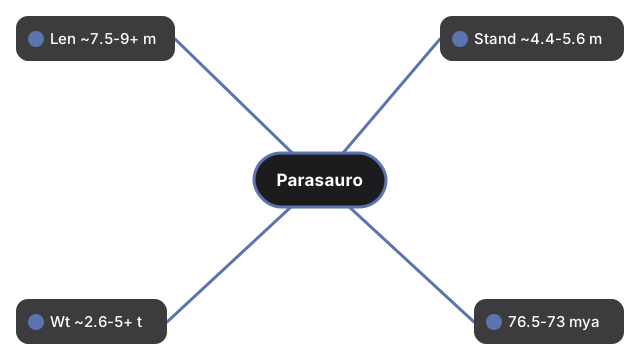
The skin tone, crest color, and pattern are an artistic reconstruction, because fossils do not preserve color or soft tissue, and this model is not a fossil-accurate skeleton; the numbers above are real published values, and ranges are shown because sources vary by species and specimen.
See also Corythosaurus and Lambeosaurus, fellow crested lambeosaurine hadrosaurs.
Frequently Asked Questions
How big was Parasaurolophus?
Published estimates vary by source and species. Wikipedia's synthesis of the literature cites roughly 7.5 to over 9 m long, with some sources giving an overall range up to about 11 m; weight estimates range from about 2.6 to more than 5 tonnes. Turn on the human figure in the viewer to see the scale against a 1.8 m person.
What was the crest for?
The long, hollow crest was formed by an extension of the nasal passages curving up and back over the skull. Its exact function is debated: proposed explanations include sound resonance, species and sex recognition, and heat regulation. No single explanation is proven, and this model does not claim one.
When and where did Parasaurolophus live?
In the Late Cretaceous, about 76.5 to 73 million years ago, in what is now western North America. Canadian paleontologist William Parks named the genus in 1922 from a specimen found in 1920 near the Red Deer River in Alberta, Canada.
Is the model scientifically accurate?
The proportions follow published figures, but the skin color and soft-tissue outline are an artistic reconstruction - fossils preserve bone, not soft tissue or color. This model is not a fossil-accurate skeleton. The length, weight, and age figures shown are real published values, with ranges cited because sources vary by species and specimen.
Do I need to install anything to view it?
No. The model renders in your browser with WebGL - no app, no account, and nothing about your visit is sent to a server. The 3D engine loads once and is then cached. When available, a free-licensed glTF model may swap in after first paint.