
Triceratops in 3D - click the frill, a horn, or a leg for a fact (full controls on the Dinosaurs 3D hub).
A Triceratops carried a solid bony frill at the back of its skull and three horns - a short one on the nose and two longer ones above the eyes - turn on the human figure to see how the whole animal, roughly the length of a school bus, compares to a person.
Skin color is an artistic guess, since bone is all fossils actually preserve. The frill and horn sizes do follow the real skeleton, and the panel's numbers are the published figures.
Triceratops 3D Viewer
Rotate the Triceratops with a drag, zoom in with scroll or pinch, and click the frill, a horn, or a leg to read a fact (full control reference on the Dinosaurs 3D hub).
Triceratops lived in the Late Cretaceous, roughly 68 to 66 million years ago, in what is now western North America. Published length estimates put most adults at about 8 to 9 m, roughly the length of a school bus, with a weight commonly cited between about 5.4 and 10 metric tons depending on the source and specimen. A solid, relatively short bony frill extended from the back of the skull, framed by two brow horns around 1 m long each and a smaller horn on the snout. The skull itself could reach nearly 3 m long, among the largest of any land animal.
American paleontologist Othniel Charles Marsh named the genus in 1889 from a holotype skull found in 1888 at the Lance Formation in Wyoming. Dozens of skeletons have since turned up, among them "Big John" (about 8 m long, one of the most complete Triceratops specimens known) and "Lane" (notable for unusually well-preserved fossil skin impressions).
| Measure | Figure |
|---|---|
| Length | about 8-9 m (commonly cited range; some sources cite 6-8.5 m for the type species) |
| Shoulder height | roughly 3 m (individual specimens range about 2.3-3.8 m) |
| Weight | about 5.4-10 metric tons (range across sources) |
| When it lived | 68-66 million years ago (Late Cretaceous, Maastrichtian) |
| Diet | Herbivore |
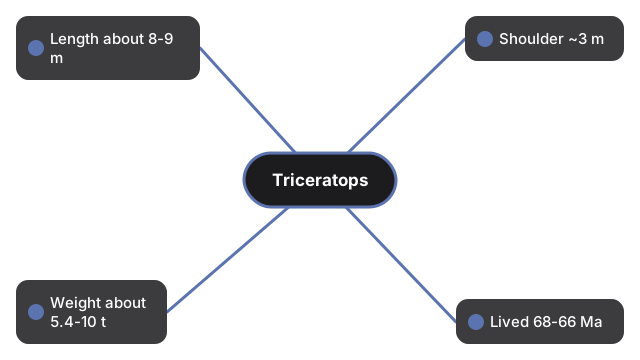
Colors here are an artistic reconstruction - fossils don't preserve them; the numbers above are real published values, and the length/weight range is shown because sources vary rather than because a single figure is invented.
For the controls walkthrough, the numbers beside a 1.8 m person, and the trade-offs versus phone AR apps, see Triceratops size comparison.
See also Styracosaurus and Pachyrhinosaurus, other frilled, horned ceratopsians.
Frequently Asked Questions
How big was a real Triceratops?
Most published estimates put an adult at about 8-9 m long and roughly 5.4-10 metric tons, with a shoulder height around 3 m - about the size of a school bus. Turn on the human figure in the viewer to see the true scale against a 1.8 m person.
What were the horns and frill for?
The two long brow horns and shorter nose horn likely served for defense and for fighting among Triceratops themselves. The solid bony frill was once thought to be purely protective, but many paleontologists now think it also helped individuals recognize their own species and signal to rivals or mates.
Is the model scientifically accurate?
The frill, horn, and body proportions follow the fossil skeleton, but the skin color and texture are an artistic reconstruction - fossils preserve bone, not soft tissue or color. The length, weight, and age figures shown are real published values.
When and where did Triceratops live?
In the Late Cretaceous, roughly 68 to 66 million years ago, in what is now western North America. The genus was named in 1889 by Othniel Charles Marsh from a skull collected in 1888 in Wyoming's Lance Formation.
Do I need to install anything to view it?
No. The model renders in your browser with WebGL - no app, no account, and nothing about your visit is sent to a server. The 3D engine loads once and is then cached.