
Drag to rotate the Archaeopteryx, scroll or pinch to zoom, and click a body part - a feathered wing, the toothed snout, or the long bony tail - to read what fossils tell us about it. The panel beside the model carries the real figures.
Archaeopteryx was a crow-sized Late Jurassic feathered theropod from Solnhofen, Germany - an early bird with teeth, clawed wings, and a long bony feathered tail. Turn on the human figure to see how a person compares to its body. It is a dinosaur, not a pterosaur.
The colors and plumage shown for this Archaeopteryx are an artistic reconstruction; fossils preserve bone and feather impressions, not living soft-tissue color in every case. This model is not a fossil-accurate skeleton. The measurements in the panel follow published estimates, with ranges shown where sources disagree.
Archaeopteryx 3D Viewer
This page renders an Archaeopteryx as a 3D model you can spin in the browser - drag to rotate, scroll or pinch to zoom, toggle a 1.8 m person beside it for scale, and click a wing, the snout, or the long bony tail to read a fact about that part.
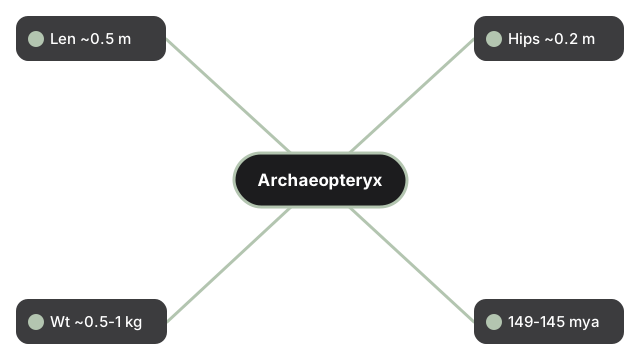
Archaeopteryx lived in the Late Jurassic, about 149 to 145 million years ago, in what is now Solnhofen, Germany. The Natural History Museum lists length about 0.5 m; mass estimates commonly fall about 0.5 to 1 kg. Hermann von Meyer named it in 1861. Feathered wings, teeth, and a long bony tail make it central to early-bird debates - and it is a dinosaur, not a pterosaur.
| Measure | Figure |
|---|---|
| Length | about 0.5 m (NHM directory) |
| Standing height | about 0.2 m at the hips (approx.) |
| Weight | about 0.5-1 kg |
| When it lived | 149-145 million years ago (Late Jurassic) |
| Diet | Carnivore (small vertebrates and insects) |
Everything runs on your device with WebGL - no account, nothing sent to a server. Soft-tissue color is an artistic reconstruction; this model is not a fossil-accurate skeleton. Figures above are published values with ranges where sources disagree.
Frequently Asked Questions
Was Archaeopteryx a bird or a dinosaur?
Both framings appear in public writing because it sits near the early-bird transition. Anatomically it is a feathered theropod dinosaur with teeth, clawed wings, and a long bony feathered tail - not a modern bird and not a pterosaur.
How big was Archaeopteryx?
About crow-sized: the Natural History Museum directory lists length about 0.5 m. Mass estimates commonly fall about 0.5 to 1 kg. Turn on the human figure to see the scale against a 1.8 m person.
When and where did it live?
In the Late Jurassic, about 149 to 145 million years ago, in the Solnhofen limestone of southern Germany. Hermann von Meyer named it in 1861.
Could it fly?
Fossils preserve asymmetric flight feathers on the wings, so aerial locomotion is widely discussed. Researchers still debate how much powered flight versus gliding it used. This page states the feathered-wing evidence without claiming a single flight mode as proven.
Is the model scientifically accurate?
The proportions follow published figures, but soft-tissue color is an artistic reconstruction. This model is not a fossil-accurate skeleton. Length, weight, and age figures are real published values, with ranges cited because sources vary.
Do I need to install anything to view it?
No. The model renders in your browser with WebGL - no app, no account, and nothing about your visit is sent to a server. When available, a free-licensed glTF model may swap in after first paint.