
Concavenator in 3D - click the hip crest, the snout, or a hind leg for a fact (full controls on the Dinosaurs 3D hub).
Concavenator was an Early Cretaceous carcharodontosaur from Spain with a pointed crest of tall vertebrae near the hips; turn on the human figure to see how a person compares to its body.
The measurements in the panel follow published estimates, with ranges shown where sources disagree.
Concavenator 3D Viewer
Below, a Concavenator you can drag to turn, zoom closer, and click the hip crest, snout, or a hind leg for a fact about that part (the Dinosaurs 3D hub lists every control).
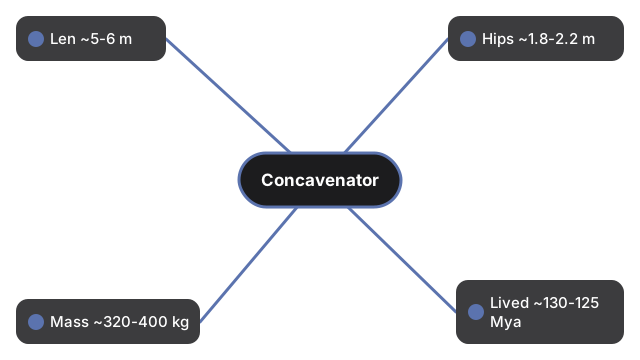
Concavenator lived in the Early Cretaceous, about 130 to 125 million years ago, in Spain (Las Hoyas / La Huerguina Formation). Adults are usually estimated at about 5 to 6 m long and about 320 to 400 kg; some popular accounts say about 1 tonne. Its name means hump-backed hunter from Cuenca - different from Carnotaurus (paired brow horns, Late Cretaceous South America).
| Measure | Figure |
|---|---|
| Length | about 5-6 m (NHM lists 6.0 m) |
| Standing height | about 1.8-2.2 m at the hips for a large adult |
| Weight | about 320-400 kg commonly cited; some accounts about 1 t |
| When it lived | about 130-125 million years ago (Early Cretaceous) |
| Diet | Carnivore |
This runs client-side through WebGL - no account to create, and nothing about your visit is transmitted to a server.
Frequently Asked Questions
What was the hump on Concavenator's back?
Two unusually tall vertebrae just in front of the hips formed a pointed crest. Soft tissue may have made a fleshy hump or a thin sail - fossils preserve the bone heights, not the covering. Researchers have suggested display and heat regulation among possible roles.
How big was Concavenator?
Most published estimates put adults at about 5 to 6 m long and about 320 to 400 kg. The NHM directory lists 6.0 m. Some popular accounts mention about 1 tonne - the panel cites ranges because sources disagree. Turn on the human figure for scale.
When and where did it live?
In the Early Cretaceous, about 130 to 125 million years ago, in what is now Spain (Las Hoyas fossil site, La Huerguina Formation).
How is it different from Carnotaurus?
Concavenator is a carcharodontosaur from Early Cretaceous Spain with a hip crest of tall vertebrae. Carnotaurus is an abelisaurid from Late Cretaceous South America with paired brow horns. This site has a separate Carnotaurus viewer for comparison.
Is the model scientifically accurate?
The proportions follow published figures, but soft-tissue color is an artistic reconstruction. This model is not a fossil-accurate skeleton. Length, weight, and age figures are real published values, with ranges cited because sources vary.
Do I need to install anything to view it?
No. The model renders in your browser with WebGL - no app, no account, and nothing about your visit is sent to a server. When available, a free-licensed glTF model may swap in after first paint.