
Drag to rotate the Ouranosaurus, scroll or pinch to zoom, and click a body part - the head, the sail on its back, the tail, or a leg - to read what fossils tell us about it. The panel beside the model carries the real figures.
Ouranosaurus was a large beaked herbivore from Early Cretaceous Niger, best known for the tall sail of elongated neural spines along its back - turn on the human figure to see how a person compares to its body and sail.
The colors and skin here are an artistic reconstruction; fossils preserve bone, not soft tissue or color. This model is not a fossil-accurate skeleton. The measurements in the panel follow published estimates, with ranges shown where sources disagree.
Ouranosaurus 3D Viewer
This page renders an Ouranosaurus as a 3D model you can spin in the browser - drag to rotate, zoom, toggle a 1.8 m person for scale, and click the head, sail, tail, or a leg to read a fact.
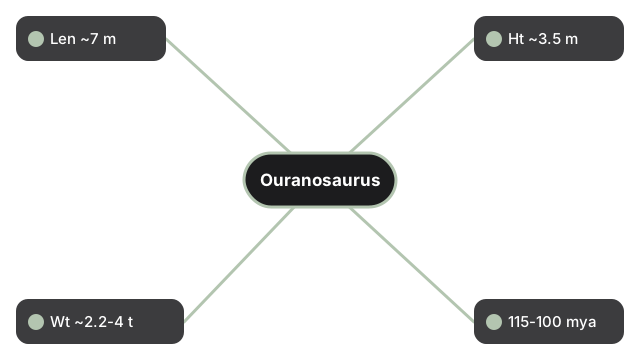
Ouranosaurus lived about 115 to 100 million years ago in Niger. The Natural History Museum lists length about 7.0 m; other estimates reach about 8.3 m, and weight about 2.2 to 4 tonnes. Philippe Taquet named it in 1976 from Elrhaz Formation fossils found in 1965.
Its signature feature is a sail of elongated neural spines. It was a beaked iguanodontian herbivore, not a spinosaur.
| Measure | Figure |
|---|---|
| Length | about 7.0 m (NHM); range about 7-8.3 m |
| Standing height | about 3.5 m including the sail (approx.) |
| Weight | about 2.2-4 tonnes |
| When it lived | 115-100 million years ago (Early Cretaceous) |
| Diet | Herbivore |
Runs on your device with WebGL - no account, nothing sent to a server. Skin and color are an artistic reconstruction; this model is not a fossil-accurate skeleton. Numbers above are real published values, with ranges where sources disagree.
Frequently Asked Questions
How big was Ouranosaurus?
The Natural History Museum lists length about 7.0 m. Other published estimates reach about 8.3 m, and weight estimates range from about 2.2 to 4 tonnes (Paul 2010 cites about 2.2 tonnes). Turn on the human figure in the viewer to see the scale against a 1.8 m person.
Was Ouranosaurus related to Spinosaurus?
No. Both animals had a sail of elongated neural spines, but Ouranosaurus was a beaked iguanodontian herbivore from Early Cretaceous Niger. Spinosaurus was a much larger fish-eating theropod from North Africa tens of millions of years later. The sail is a convergent look, not proof they were close relatives.
When and where did Ouranosaurus live?
In the Early Cretaceous, about 115 to 100 million years ago, in what is now Niger. Philippe Taquet named Ouranosaurus nigeriensis in 1976 from fossils found in the Elrhaz Formation in 1965.
Is the model scientifically accurate?
The proportions follow published figures, but the skin color and soft-tissue outline are an artistic reconstruction - fossils preserve bone, not soft tissue or color. This model is not a fossil-accurate skeleton. The length, weight, and age figures shown are real published values, with ranges cited because sources vary.
Do I need to install anything to view it?
No. The model renders in your browser with WebGL - no app, no account, and nothing about your visit is sent to a server. The 3D engine loads once and is then cached. A free-licensed glTF model swaps in after first paint to show the sail-backed body.