
Brontosaurus in 3D - click long neck, a pillar leg, or the whip-like tail for a fact (full controls on the Dinosaurs 3D hub).
Brontosaurus - the "thunder lizard" - was a Late Jurassic sauropod long synonymized with Apatosaurus and reinstated as its own genus in 2015; turn on the human figure to see how a person compares to its body.
The measurements in the panel follow published estimates, with ranges shown where sources disagree.
Brontosaurus 3D Viewer
Spin this Brontosaurus model by dragging, zoom for detail, and click the neck, a leg, or the tail to surface a fact about it (see the Dinosaurs 3D hub for the full control list).
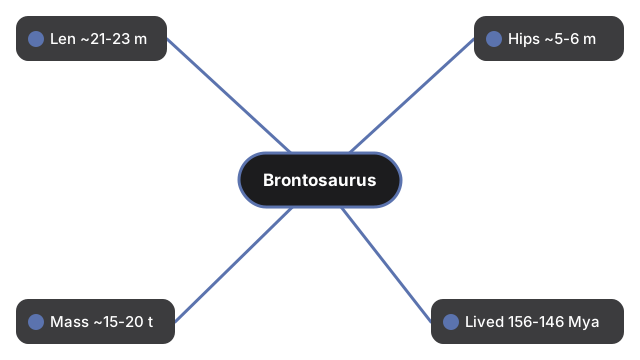
Brontosaurus lived in the Late Jurassic, about 156 to 146 million years ago, in the Morrison Formation of western North America. The largest species, B. excelsus, measured about 21 to 23 m long and is commonly estimated at about 15 to 20 tonnes, though some published averages run higher. Othniel Charles Marsh named Brontosaurus excelsus in 1879; for much of the twentieth century it was treated as a synonym of Apatosaurus, until a 2015 specimen-level study by Tschopp, Mateus, and Benson reinstated it as a separate genus.
Compared with Apatosaurus, Brontosaurus is diagnosed mainly by differences in its cervical vertebrae and other diplodocid characters recovered in that analysis - not by popular "thunder lizard" lore alone. Both were long-necked, whip-tailed herbivores that shared Late Jurassic floodplains with Allosaurus, Stegosaurus, and Ceratosaurus. A sister page on this site covers Apatosaurus if you want the comparison side by side.
| Measure | Figure |
|---|---|
| Length | about 21-23 m (B. excelsus); smaller species about 19 m |
| Standing height | about 5-6 m at the shoulder for a large adult |
| Weight | about 15-20 tonnes commonly cited for B. excelsus; some published averages higher |
| When it lived | 156-146 million years ago (Late Jurassic, Kimmeridgian-Tithonian) |
| Diet | Herbivore (ferns, cycads, conifers and other high vegetation) |
The skin tone and pattern are an artistic reconstruction, because fossils preserve bone, not soft tissue or color; this model is not a fossil-accurate skeleton, and the numbers above are real published values with ranges where sources disagree.
See also Apatosaurus and Diplodocus, close diplodocid relatives.
Frequently Asked Questions
How big was Brontosaurus?
B. excelsus is commonly estimated at about 21 to 23 m long and about 15 to 20 tonnes, with smaller species around 19 m. Some published averages for mass run higher, so the panel cites a range. Turn on the human figure to see the scale against a 1.8 m person.
Is Brontosaurus the same as Apatosaurus?
For most of the twentieth century, yes in museum labels - Brontosaurus was synonymized with Apatosaurus. A 2015 PeerJ study by Tschopp, Mateus, and Benson reinstated Brontosaurus as a distinct genus based on a specimen-level phylogeny of diplodocids. This site also has a separate Apatosaurus viewer for comparison.
When and where did Brontosaurus live?
In the Late Jurassic, about 156 to 146 million years ago, in the Morrison Formation of western North America. Marsh named B. excelsus in 1879 from Wyoming material.
What does the name mean?
Brontosaurus means "thunder lizard." The name stuck in popular culture even while paleontologists treated the animal as Apatosaurus for decades.
Is the model scientifically accurate?
The proportions follow published figures, but the skin color and soft-tissue outline are an artistic reconstruction - fossils preserve bone, not soft tissue or color. This model is not a fossil-accurate skeleton. Length, weight, and age figures are real published values, with ranges cited because sources vary.
Do I need to install anything to view it?
No. The model renders in your browser with WebGL - no app, no account, and nothing about your visit is sent to a server. The 3D engine loads once and is then cached. When available, a free-licensed glTF model may swap in after first paint.