
Pteranodon in 3D - click the head, crest, body, wing, or leg for a fact (full controls on the Dinosaurs 3D hub).
Pteranodon was a flying reptile with a toothless beak and a bony head crest - turn on the human figure to compare a 1.8 m person with a roughly 6.5 m wingspan.
Pteranodon was not a dinosaur. The measurements in the panel follow published paleontology figures.
Pteranodon 3D Viewer
Rotate the Pteranodon below by dragging, zoom in with the scroll wheel, and click a body part to reveal a fact (see the Dinosaurs 3D hub for every control).
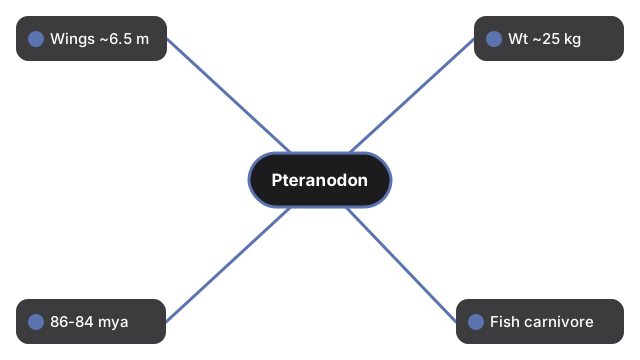
Pteranodon was a pterosaur (a flying reptile), not a dinosaur. It lived in the Late Cretaceous, about 86 to 84 million years ago, over the Western Interior Seaway in what is now the central United States. Adult male wingspans are commonly about 5.6 to 7.6 m; this page uses about 6.5 m as a representative large adult. Mass estimates vary widely because the skeleton is extremely lightly built; about 25 kg is shown as a mid-range figure within a published band of roughly 20-50 kg.
The genus was named by Othniel Charles Marsh in 1876 from Kansas chalk finds (type species Pteranodon longiceps). Large head crests differed by sex and species and were likely used for display.
| Measure | Figure |
|---|---|
| Wingspan (representative large adult) | about 6.5 m (adult males commonly about 5.6-7.6 m) |
| Weight | about 25 kg (published estimates often about 20-50 kg) |
| When it lived | 86-84 million years ago (Late Cretaceous) |
| Diet | Carnivore (mainly fish) |
| What it was | Pterosaur (flying reptile) - not a dinosaur |
Colors here are an artistic reconstruction - fossils don't preserve them; the numbers above are real published values.
See also Quetzalcoatlus, a fellow flying pterosaur, not a dinosaur, but one of this site's other prehistoric 3D models.
Frequently Asked Questions
Was Pteranodon a dinosaur?
No. Pteranodon was a pterosaur - a flying reptile that lived alongside dinosaurs but was not itself a dinosaur. The copy on this page states that plainly.
How big was Pteranodon?
Adult male wingspans are commonly about 5.6 to 7.6 m; this viewer uses about 6.5 m as a representative large adult. Mass estimates often fall around 20-50 kg; about 25 kg is shown as a mid-range figure. Turn on the human figure to compare a 1.8 m person with that wingspan.
When and where did Pteranodon live?
In the Late Cretaceous, about 86 to 84 million years ago, mainly over the Western Interior Seaway in what is now the central United States. Othniel Charles Marsh named the genus in 1876 from Kansas chalk finds (Pteranodon longiceps).
Is the model scientifically accurate?
The proportions follow published figures, but the skin color and soft-tissue outline are an artistic reconstruction - fossils preserve bone, not soft tissue or color. This model is not a fossil-accurate skeleton. The wingspan, weight range, and age figures shown are real published values.
Do I need to install anything to view it?
No. The model renders in your browser with WebGL - no app, no account, and nothing about your visit is sent to a server. The 3D engine loads once and is then cached.