
Drag to rotate the Oviraptor, scroll or pinch to zoom, and click a body part - the head, tail, or a leg - to read what fossils tell us about it. The panel beside the model carries the real figures.
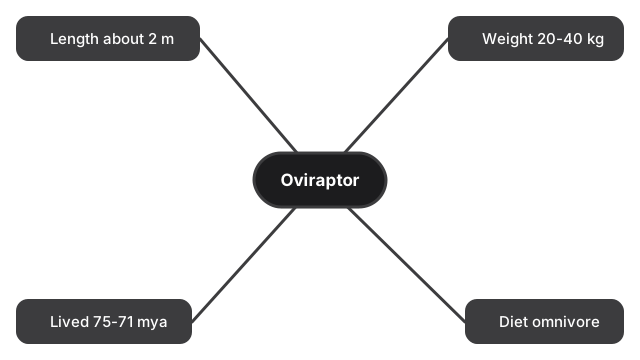
Oviraptor stretched roughly 2 m from its toothless beak to the tip of its tail and weighed somewhere in the 20 to 40 kg range - turn on the human figure to compare it against a person.
The colors and skin here are an artistic reconstruction; fossils preserve bone, not soft tissue or color. This model does not carry the enlarged sickle-shaped foot claw seen in dromaeosaurids such as Velociraptor, because Oviraptor did not have one - the measurements in the panel are the ones actually published.
Oviraptor 3D Viewer
This page renders an Oviraptor as a 3D model you can spin: drag to rotate, pinch to zoom, add a 1.8 m person for scale, and click a body part for a fact.
Oviraptor philoceratops lived in the Late Cretaceous, roughly 75-71 million years ago, in the Djadochta Formation of Mongolia's Gobi Desert - about 2 m long and 20 to 40 kg, with a toothless, curved beak strong enough to crush hard food. The holotype (AMNH 6517) was found in 1923 during Roy Chapman Andrews' AMNH-led Central Asiatic Expeditions, near a nest of eggs then attributed to Protoceratops; Henry Fairfield Osborn named the genus in 1924 as "egg seizer". Later finds of matching embryos inside the same egg type showed Oviraptor was very likely brooding its own eggs, not stealing them - the name survives today only as a historical misnomer kept for taxonomic priority.
| Measure | Figure |
|---|---|
| Length | about 2 m (range 1.6-2 m) |
| Weight | about 20-40 kg |
| When it lived | 75-71 million years ago (Late Cretaceous) |
| Diet | Omnivore/uncertain - toothless beak capable of crushing hard material |
Everything runs on your device with WebGL - no account, nothing sent to a server. Skin tone and pattern are artistic reconstruction; the numbers above are real published values. Unlike sickle-clawed dromaeosaurids such as Velociraptor, Oviraptor did not carry an enlarged raptorial foot claw, so this model does not show one.
Frequently Asked Questions
How big was a real Oviraptor?
About 2 m long (published ranges run 1.6-2 m) and roughly 20 to 40 kg - turn on the human figure in the viewer to see the true scale against a 1.8 m person.
Did Oviraptor really steal eggs?
No. The name means "egg seizer" because the 1923 type specimen was found near a nest then attributed to Protoceratops. Later fossil finds of matching embryos inside the same egg type showed Oviraptor was very likely brooding its own eggs, not raiding a nest. The name stuck anyway, for taxonomic priority.
Did Oviraptor have teeth?
No. It had a toothless, curved, parrot-like beak likely strong enough to crush hard food. This model shows the beak and skips teeth entirely, matching the fossil skull.
Is the model scientifically accurate?
The proportions follow the fossil skeleton, but the skin color and texture are an artistic reconstruction - fossils preserve bone, not soft tissue or color. The length, weight, and age figures shown are real published values. Unlike dromaeosaurids such as Velociraptor, Oviraptor did not have an enlarged sickle-shaped foot claw, so this model does not add one.
When and where did Oviraptor live?
In the Late Cretaceous, roughly 75 to 71 million years ago, in the Djadochta Formation of what is now the Gobi Desert of Mongolia. The holotype was found in 1923 and the genus was named in 1924.
Do I need to install anything to view it?
No. The model renders in your browser with WebGL - no app, no account, and nothing about your visit is sent to a server. The 3D engine loads once and is then cached.