
Majungasaurus in 3D - click the short snout, the skull horn, or a stocky hind leg for a fact (full controls on the Dinosaurs 3D hub).
Majungasaurus was a Late Cretaceous abelisaurid from Madagascar with a single rounded horn on the skull roof; turn on the human figure to see how a person compares to its body.
The measurements in the panel follow published estimates, with ranges shown where sources disagree.
Majungasaurus 3D Viewer
The Majungasaurus below rotates as you drag - zoom with the wheel and click the snout, skull horn, or a hind leg to pull up a fact (every control is on the Dinosaurs 3D hub).
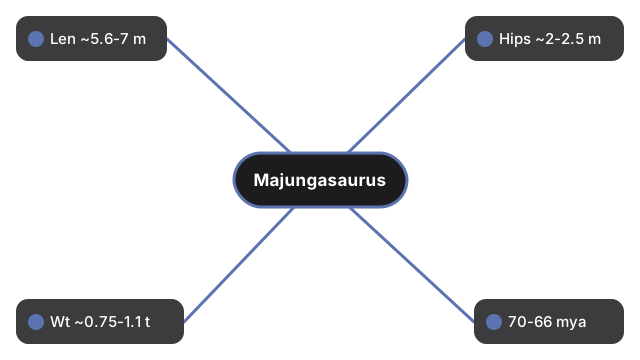
Majungasaurus lived in the Late Cretaceous, about 70 to 66 million years ago, in Madagascar. Typical adults measured about 5.6 to 7 m long and about 0.75 to 1.1 tonnes. It is an abelisaurid with a short, broad snout and a single rounded horn on the skull roof - different from Carnotaurus, which has paired brow horns and lived in South America.
| Measure | Figure |
|---|---|
| Length | about 5.6-7 m typical; some larger individuals possibly over 8 m |
| Standing height | about 2-2.5 m at the hips for a large adult |
| Weight | about 0.75-1.1 tonnes commonly cited |
| When it lived | 70-66 million years ago (Late Cretaceous, Maastrichtian) |
| Diet | Carnivore (including evidence of feeding on other Majungasaurus) |
No server round-trip here - WebGL draws the model locally in your browser, with no account required.
Frequently Asked Questions
How is Majungasaurus different from Carnotaurus?
Both are abelisaurids, but Majungasaurus lived in Madagascar and carries a single rounded horn on the skull roof. Carnotaurus lived in South America and has paired brow horns. This site has a separate Carnotaurus viewer for comparison.
How big was Majungasaurus?
Typical adults are estimated at about 5.6 to 7 m long and about 0.75 to 1.1 tonnes. Some fragmentary remains suggest larger individuals. Turn on the human figure to see the scale against a 1.8 m person.
When and where did it live?
In the Late Cretaceous Maastrichtian, about 70 to 66 million years ago, in Madagascar (Maevarano Formation).
Did Majungasaurus eat its own kind?
Tooth marks on Majungasaurus bones match Majungasaurus teeth, which is published evidence of cannibalism or scavenging of the same species. The panel cites that as fossil evidence, not as a unique behavioral claim beyond what the bones show.
Is the model scientifically accurate?
The proportions follow published figures, but soft-tissue color is an artistic reconstruction. This model is not a fossil-accurate skeleton. Length, weight, and age figures are real published values, with ranges cited because sources vary.
Do I need to install anything to view it?
No. The model renders in your browser with WebGL - no app, no account, and nothing about your visit is sent to a server. When available, a free-licensed glTF model may swap in after first paint.