
Ichthyovenator in 3D - click the sail, the head, or a leg for a fact (full controls on the Dinosaurs 3D hub).
Ichthyovenator was an Asian spinosaurid from Laos with a wave-like sail - distinct from the continuous sail of Spinosaurus. Length estimates for the holotype are about 8.5-10.5 m.
Colors are an artistic reconstruction (fossils don't preserve them). The measurements in the panel are the real published ones.
Ichthyovenator 3D Viewer
Grab and turn the Ichthyovenator model below, zoom for a closer look, and click the sail, the head, or a leg to surface a fact (the Dinosaurs 3D hub explains every control).
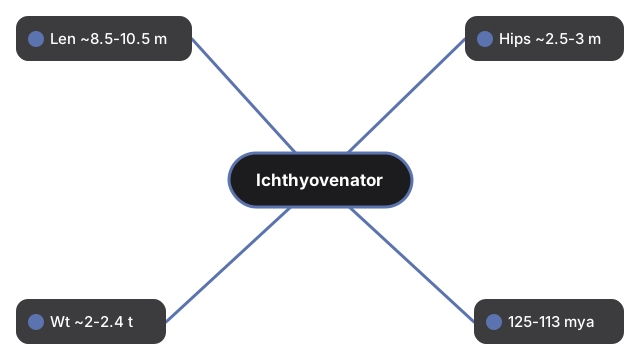
Ichthyovenator lived in the Early Cretaceous, about 125 to 113 million years ago, in what is now Laos. It was a spinosaurid - a crocodile-snouted theropod often linked to fish-eating. Holotype length estimates are about 8.5-10.5 m and about 2-2.4 tonnes. Named by Allain and colleagues in 2012. Its sail is sinusoidal (wave-like), unlike the continuous sail of Spinosaurus.
| Measure | Figure |
|---|---|
| Length | about 8.5-10.5 m (holotype range) |
| Standing height | about 2.5-3 m at the hips for a large adult (proportionate estimate) |
| Weight | about 2-2.4 tonnes |
| When it lived | about 125-113 million years ago (Early Cretaceous) |
| Diet | Carnivore (often fish) |
No app and no login needed - WebGL renders the model locally, and the visit is never sent to a server.
Frequently Asked Questions
How big was Ichthyovenator?
Holotype length estimates are about 8.5-10.5 m, with mass about 2-2.4 tonnes. Turn on the human figure to judge the scale beside a 1.8 m person.
How is Ichthyovenator different from Spinosaurus?
Ichthyovenator is from Early Cretaceous Laos and has a sinusoidal (wave-like) sail that dips over the hips. Spinosaurus is a later North African form usually reconstructed with a taller continuous sail and a larger body.
Where did Ichthyovenator live?
Fossils come from the Grès Supérieurs Formation in Savannakhet Province, Laos, from the late Early Cretaceous.
Is the model scientifically accurate?
The body proportions and sail shape follow published reconstructions of the holotype, but the skin color and texture are an artistic reconstruction. Fossils preserve bone, not color. The figures shown are real published values with ranges where sources disagree.
When was Ichthyovenator named?
Allain and colleagues named Ichthyovenator laosensis in 2012 - the first definitive Asian spinosaurid.