
Drag to rotate the Corythosaurus, scroll or pinch to zoom, and click a body part - the helmet crest, the beak, the tail, or a leg - to read what fossils tell us about it. The panel beside the model carries the real figures.
Corythosaurus was a large duck-billed herbivore from Late Cretaceous western North America, named for a bony crest shaped like a Corinthian helmet - turn on the human figure to see how a person compares to its body.
The colors and skin here are an artistic reconstruction; fossils preserve bone, not soft tissue or color. This model is not a fossil-accurate skeleton. The measurements in the panel follow published estimates, with ranges shown where sources disagree.
Corythosaurus 3D Viewer
This page renders a Corythosaurus as a 3D model you can spin in the browser - drag to rotate, zoom, toggle a 1.8 m person for scale, and click the crest, beak, tail, or a leg to read a fact.
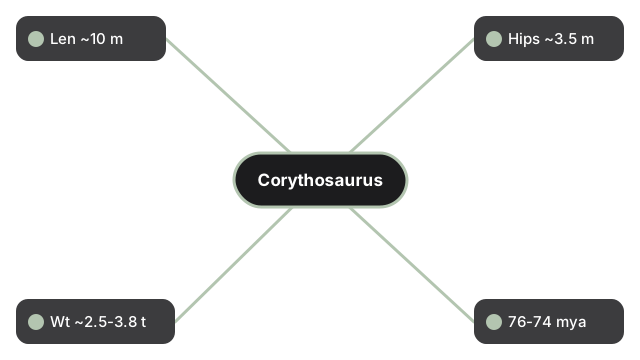
Corythosaurus lived about 76 to 74 million years ago in Canada and the USA. The Natural History Museum lists length about 10.0 m; other published lengths about 7.7-9 m and weights about 2.5-3.8 tonnes. Barnum Brown named it in 1914. Its rounded bony crest is shaped like a Corinthian helmet - related to, but distinct from, Parasaurolophus's long tube crest.
| Measure | Figure |
|---|---|
| Length | about 10.0 m (NHM); range about 7.7-10 m |
| Standing height | about 3.5 m at the hips (approx.) |
| Weight | about 2.5-3.8 tonnes |
| When it lived | 76-74 million years ago (Late Cretaceous) |
| Diet | Herbivore (soft plants, needles, fruits) |
Runs on your device with WebGL - no account, nothing sent to a server. Soft-tissue color is artistic; this model is not a fossil-accurate skeleton. Numbers above are published values, with ranges where sources disagree.
Frequently Asked Questions
How big was Corythosaurus?
The Natural History Museum lists length about 10.0 m. Other published figures commonly fall about 7.7-9 m long and about 2.5-3.8 tonnes. Turn on the human figure to see the scale against a 1.8 m person.
What was the crest for?
The rounded bony crest is shaped like a Corinthian helmet (the name Corythosaurus). Like other lambeosaurine crests, it housed nasal passages; proposed roles include sound resonance and display. No single function is proven, and this page does not claim one.
When and where did it live?
In the Late Cretaceous, about 76 to 74 million years ago, in what is now Canada and the USA. Barnum Brown named Corythosaurus casuarius in 1914.
How is it different from Parasaurolophus?
Both are crested duckbills, but Corythosaurus has a tall, rounded helmet crest, while Parasaurolophus is known for a long, hollow tube crest sweeping back from the skull. This page focuses on the helmet-crested form.
Is the model scientifically accurate?
The proportions follow published figures, but soft-tissue color is an artistic reconstruction. This model is not a fossil-accurate skeleton. Length, weight, and age figures are real published values, with ranges cited because sources vary.
Do I need to install anything to view it?
No. The model renders in your browser with WebGL - no app, no account, and nothing about your visit is sent to a server. When available, a free-licensed glTF model may swap in after first paint.