
Ornithomimus in 3D - click the beak, a long leg, or a shoulder for a fact (full controls on the Dinosaurs 3D hub).
Ornithomimus was a Late Cretaceous ostrich-mimic from Alberta - smaller and North American beside the Mongolian Gallimimus; turn on the human figure to see how a person compares to its body.
Feather fossils are known from Ornithomimus in Alberta, but the soft-tissue outline and color on this model remain interpretive. The measurements in the panel follow published estimates, with ranges shown where sources disagree.
Ornithomimus 3D Viewer
Rotate the Ornithomimus with a drag, zoom in with scroll or pinch, and click the beak, a long leg, or a shoulder to read a fact (full control reference on the Dinosaurs 3D hub).
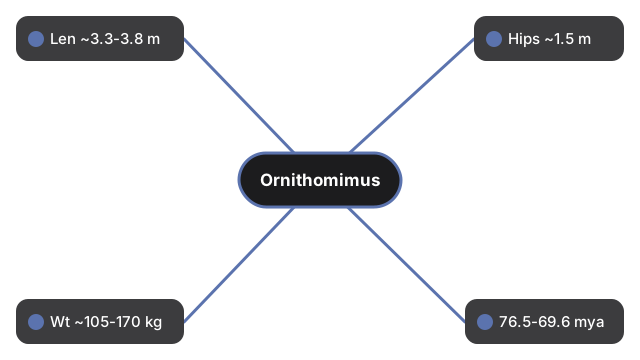
Ornithomimus lived in the Late Cretaceous, about 76.5 to 69.6 million years ago, in Alberta (Dinosaur Park and Horseshoe Canyon Formations). O. edmontonicus is commonly cited near 3.8 m and about 170 kg; smaller figures near 3.3 m and 105 kg also appear. It is the North American ostrich-mimic - distinct from Gallimimus, the larger Mongolian form about 6 m and 400-490 kg.
| Measure | Figure |
|---|---|
| Length | about 3.3-3.8 m (Paul 2010 cites 3.8 m for O. edmontonicus) |
| Standing height | about 1.5 m at the hips for a large adult (proportionate estimate) |
| Weight | about 105-170 kg (Paul 2010 about 170 kg) |
| When it lived | about 76.5-69.6 million years ago (Late Cretaceous) |
| Diet | Unresolved - omnivory often proposed |
The 3D engine runs entirely in your browser through WebGL; no account and no data leaves your device.
See also Gallimimus, a fellow ostrich-mimic ornithomimid.
Frequently Asked Questions
How is Ornithomimus different from Gallimimus?
Both are ostrich-mimics, but Ornithomimus is a smaller North American form from Alberta (about 3.3-3.8 m / 105-170 kg), while Gallimimus is a larger Mongolian Nemegt form (about 6 m / 400-490 kg). This site has separate viewers for each.
How big was Ornithomimus?
O. edmontonicus is commonly cited near 3.8 m long and about 170 kg (Paul 2010). Smaller estimates near 3.3 m and 105 kg also appear. Turn on the human figure to see the scale against a 1.8 m person.
When and where did it live?
In the Late Cretaceous, about 76.5 to 69.6 million years ago, in Alberta - Dinosaur Park and Horseshoe Canyon Formations. The type species O. velox was named from Colorado material in 1890.
Did Ornithomimus have feathers?
Yes - feather fossils are known from Ornithomimus specimens in Alberta (reported from 2008 onward). Soft-tissue color is still unknown, so the model color remains an artistic reconstruction.
Is the model scientifically accurate?
The proportions follow published figures, but soft-tissue color is an artistic reconstruction. This model is not a fossil-accurate skeleton. Length, weight, and age figures are real published values, with ranges cited because sources vary.
Do I need to install anything to view it?
No. The model renders in your browser with WebGL - no app, no account, and nothing about your visit is sent to a server. When available, a free-licensed glTF model may swap in after first paint.