Planet Size Comparison 3D Explorer - Wann Nutzen, Schritt für Schritt und im Vergleich
Redaktion von freetoolonline.comDer Planet Size Comparison 3D Explorer zeichnet die Sonne und alle acht Planeten als Kugeln, deren Größe auf den veröffentlichten mittleren NASA-Radien beruht, von der Sonne mit 696,340 km bis zu Merkur mit nur 2,440 km. Er läuft in diesem Browser, ohne Installation und ohne Konto: ziehen, um die Reihe zu umkreisen, scrollen oder mit zwei Fingern zoomen und auf eine Welt-Schaltfläche klicken, um sie hervorzuheben und ihren Radius zu lesen.
Zwei Planeten Schritt für Schritt vergleichen
Drei Handgriffe genügen für einen vollständigen Vergleich im Planet Size Comparison 3D Explorer. Erstens: warten, bis die Statuszeile unter der Zeichenfläche anzeigt, dass Sie zum Umkreisen ziehen und zum Zoomen scrollen können; das Datenfeld öffnet sich mit bereits hervorgehobener Erde und einer Tabelle aller neun Radien. Zweitens: auf Jupiter klicken, um seine Kugel mit 69,911 km hervorzuheben, dann auf die Erde mit 6,371 km, während die Überschrift des Datenfelds auf die gewählte Welt wechselt und die Kamera näher heranrückt. Drittens: Pause spin friert die Reihe für einen Screenshot ein, Play spin dreht sie langsam weiter. Der Vollbildmodus hält die Welt-Schaltflächen und das Datenfeld sichtbar, während Sie die Ansicht drehen und zoomen.
Die neun Radien im Datenfeld
| Welt | Mittlerer Radius (NASA) |
|---|---|
| Sonne | 696,340 km |
| Merkur | 2,440 km |
| Venus | 6,052 km |
| Erde | 6,371 km |
| Mars | 3,390 km |
| Jupiter | 69,911 km |
| Saturn | 58,232 km |
| Uranus | 25,362 km |
| Neptun | 24,622 km |
Der Radius jeder Kugel bleibt proportional zur Zahl in dieser Zeile, der Größensprung von der Erde zu Jupiter ist also das echte Verhältnis und keine Zeichnung. Die Szene nutzt Jupiter als Bezugsmaßstab, wodurch die inneren Planeten neben der Sonne groß genug bleiben, um sie zu erkennen.
Eine fünfminütige Demo im Unterricht
Eine fünfminütige Demo ist die Sitzung, für die der Planet Size Comparison 3D Explorer am besten passt: Seite öffnen, Jupiter mit 69,911 km hervorheben, dann die Erde mit 6,371 km, und die Klasse sieht den Größensprung der Kugel. Pause spin liefert ein Standbild zum Besprechen, und die Tabelle im Datenfeld beantwortet die Anschlussfrage nach der Sonne mit 696,340 km gegenüber Merkur mit 2,440 km, ohne die Szene zu verlassen. Es wird nichts installiert und keine Anmeldung unterbricht die Stunde, ein gemeinsam genutzter Klassenrechner funktioniert also genauso wie ein Laptop.
Der Vergleich mit den anderen Space-3D-Szenen
| Aspekt | Planet Size Comparison 3D Explorer | Solar System 3D Explorer | Moon Phases 3D Explorer |
|---|---|---|---|
| Was zu sehen ist | Neun Welten in einer Reihe im echten Radiusverhältnis | Planeten auf ihren Bahnen um die Sonne | Phasengeometrie von Sonne, Erde und Mond |
| Kugelgrößen | Maßstabsgetreu, Erde 6,371 km neben Jupiter 69,911 km | Gestaucht, damit die Bahnen auf einen Bildschirm passen | Kein Größenvergleich |
| Bewegung | Nur Drehung, keine Bahnbewegung | Bahnbewegung | Durchläuft einen synodischen Monat |
| Installation und Preis | 0 MB, USD 0, kein Konto | 0 MB, USD 0, kein Konto | 0 MB, USD 0, kein Konto |
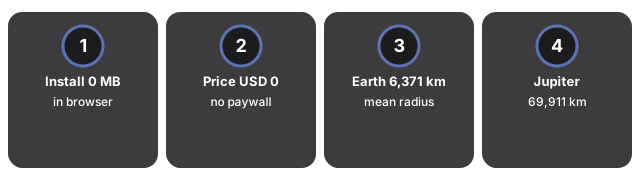
Gegenüber einem statischen Schulbuchdiagramm bleibt der Unterschied, dass dieselben neun Radien lesbar bleiben, während Sie zum Umkreisen ziehen, eine Welt hervorheben und die Drehung anhalten. Eine Planetarium-App beantwortet eine andere Frage, nämlich wo Objekte am heutigen Himmel stehen, und verlangt meist zuerst eine Installation.
Sitzungen, für die er nicht passt
Manche Sitzungen brauchen eine andere Szene. Der Planet Size Comparison 3D Explorer zeigt keine Bahnbewegung, stellt die Welten nicht in ihren echten Abständen zur Sonne auf und vergleicht keine Massen, heliozentrische Entfernungen und Massenfragen gehören also woanders hin. Ebenso fehlen die fünf anerkannten Zwergplaneten neben den acht IAU-Welten; für Ceres, Pluto, Haumea, Makemake und Eris nebeneinander nutzen Sie den Dwarf Planet Size Comparison Leitfaden. Für Planeten auf ihren Bahnen mit gestauchten Kugelgrößen nutzen Sie den Solar System 3D Explorer. Für die Phasengeometrie von Sonne, Erde und Mond nutzen Sie den Moon Phases 3D Explorer. Die Szene braucht außerdem WebGL-Unterstützung im Browser, um überhaupt zu rendern.
Häufige Fragen
Muss ich etwas installieren, um den 3D-Explorer zu nutzen?
Nein. Alles wird in Ihrem Browser auf Ihrem eigenen Gerät gerendert. Es gibt keine Installation und kein Konto, und es wird nichts hochgeladen.
Wie stelle ich zwei Planeten nebeneinander?
Klicken Sie auf eine beliebige Welt-Schaltfläche, um sie hervorzuheben und ihren mittleren NASA-Radius im Datenfeld zu lesen, ziehen Sie dann zum Umkreisen und zoomen Sie mit Scrollrad oder zwei Fingern, bis beide Welten gleichzeitig im Bild sind.
Sind die Abstände zwischen den Kugeln echte Entfernungen?
Nein. Nur die Radien sind maßstabsgetreu. Der Abstand zwischen den Welten ist so gewählt, dass die ganze Reihe auf einem Bildschirm lesbar bleibt. Behandeln Sie die Szene daher als Größenvergleich und nicht als Karte des Sonnensystems.
Wer hält diesen Leitfaden aktuell?
Die Redaktion von FreetoolOnline prüft ihn gegen die veröffentlichte Szene und kontrolliert die genannten Radien erneut. Das Prüfdatum steht oben auf dieser Seite unter der Überschrift.
Für den Mondzyklus statt der Planetengrößen vergleicht der Leitfaden zum Moon Phases 3D Explorer den 29,53-tägigen synodischen Monat mit dem 27,32-tägigen siderischen Monat.
Why trust these tools
- Ten-plus years of web tooling. The freetoolonline editorial team has shipped browser-based utilities since 2015. The goal has never changed: get you to a working output fast, without an install.
- No install, no sign-up. Open a tool and get a working output in seconds - nothing to download and no account to create. Tools that need heavy processing run it on our service, so even a low-powered machine gets the job done.
- Analytics stops at the page view. We measure which pages get visited, not what you type or upload inside a tool. There is nothing to sign in to and no profile is attached to your input.
- Open-source core components. The processing engines underneath (libheif, libde265, pdf-lib, terser, clean-css, ffmpeg.wasm, and others) are public and audit-able. We link to each one in its tool page's footer.
- Free, with or without ads. All tools are fully functional without sign-up. The Disable Ads button in the header is always available if you need a distraction-free run.